
African elephants (Loxodonta Africana cyclotis) serve a pivotal role in shaping forest ecosystems, particularly in regions like Mount Cameroon national park. Their size and behavior impact various ecological components, from canopy structure to understory dynamics. Also, elephants play a crucial role as ecosystem engineers, and their foraging and browsing behaviors induce significant disturbances that shape forest characteristics. This study explored the impact of African forest elephants’ activity on the forest ecology of Mount Cameroon national park, focusing on six key areas, forest canopy structure, tree species composition, forest tree regeneration, vine growth, forest understory dynamics, and large trees formation. Research data collection was carried out five days each month, for a period of six months. Systematic vegetation plots within selected sites were established to examine tree abundance and species diversity. Quadrats and transects were equally used to capture data on the types and numbers of trees, especially focusing on both preferred and less preferred species by elephants. The results of this study showed that African forest elephant activity recorded a significant association on forest canopy structure r=0.309 P=0.001, tree species composition X2=83.267 df=6 P=0.000, forest tree regeneration X2=45.891 df=6 P=0.000, vine growth X2=54.030 df=6 P=0.000, forest understory X2=69.696 df=6 P=0.000, and large trees structure X2=73.283 df=6 P=0.000 respectively. Furthermore, human-wildlife conflict revealed a significant link on elephant population threat X2=63.720 df=4 P=0.000, biodiversity rating X2=63.154 df=4 P=0.000, and elephants grouping behaviour X2=62.876 df=4 P=0.000 respectively. Forest elephants play a crucial role in rainforest ecosystem. Their activities, including browsing, trampling, and creating trails, modify the forest structure, which in turn affects resource availability and habitat for other species. As human populations expand into rainforest areas, elephants face habitat loss and fragmentation. This encroachment reduces the space available for elephants to roam and feed, leading to population declines. The findings indicated that elephant interactions result in increased biodiversity, altered species distributions, and varying regeneration patterns, which collectively contribute to the resilience of forest ecosystems. This research equally underscores the importance of elephants in maintaining ecological balance in Mount Cameroon national park and provides insights for effective conservation strategies aimed at protecting both elephant populations and the valuable forest habitat they help sustain.
| Published in | American Journal of Zoology (Volume 9, Issue 1) |
| DOI | 10.11648/j.ajz.20260901.13 |
| Page(s) | 23-32 |
| Creative Commons |
This is an Open Access article, distributed under the terms of the Creative Commons Attribution 4.0 International License (http://creativecommons.org/licenses/by/4.0/), which permits unrestricted use, distribution and reproduction in any medium or format, provided the original work is properly cited. |
| Copyright |
Copyright © The Author(s), 2026. Published by Science Publishing Group |
African Elephant, Forest Ecosystem, Ecosystem Engineers, Understory Dynamics
| [1] | Ayimisin, E. A., Akinyemi, K. A., & Ipinmoroti, R. (2022). "Disturbance by elephants increases bird community diversity through environmental heterogeneity." PLOS ONE, 17(8), e0272761. |
| [2] | Berzaghi, F., Rulli, M. C., & Pavan, G. (2022). "Financing conservation by valuing carbon services produced by wild animals." Proceedings of the National Academy of Sciences, 119(22), e2120426119. |
| [3] | Blake S. 2002. The Ecology of Forest Elephant Distribution and its Implications for Conservation- A thesis submitted for the degree of PhD. 319. |
| [4] | Blake, S., Walsh, P. D., & S. J. D. (2008). "Forest elephant distribution in the Ndoki Forest, Republic of Congo." Ecology and Evolution, 1(1), 1-18. |
| [5] | Bunney, T. D., Asha, D. M., & Gray, T. N. E. (2017). "Elephant conservation and sustainable development: Perspectives from the field." PLOS ONE, 12(5), e0177682. |
| [6] | Campos-Arceiz, A., & Blake, S. (2011). "Megagardeners of the Forest—The Role of Elephants in Seed Dispersal." Acta Oecologica, 37(6), 542-553. |
| [7] | Christian, K. A., Herring, W., & Harris, S. (1997). "The impact of resource distribution on the foraging behavior of the eastern grey kangaroo." Australian Journal of Ecology, 22(2), 173-182. |
| [8] | Chiyo, P. I., et al. (2015). "The impact of elephants on their environment: An ecological perspective." Frontiers in Ecology and the Environment, 13(2), 102-111. |
| [9] | Dublin, H. T., Sinclair, A. R. E., & McGlade, J. (1990). "Elephant populations in a human-dominated landscape." Conservation Biology, 4(3), 437-444. |
| [10] | Duncan, A., M. J. D. et al. (2011). "The role of herbivores in the establishment of forest structure in riverine forests." Forest Ecology and Management, 261(11), 930-934. |
| [11] | Ferreira, A., et al. (2017). "Ecological studies of elephants: Insights and implications for conservation." Wildlife Biology, 2017(2), 1-12. |
| [12] | Ferreira, J. C. A. S., et al. (2016). Vine dynamics in tropical forests: The impact of large herbivores. Journal of Ecology, 104(5), 1130-1138. |
| [13] | Ferreira, M. C. T., et al. (2014). The role of elephants in forest dynamics. Ecological Applications, 24(7), 1632-1641. |
| [14] | Graham, N., et al. (2010). "R T B and Routinized Health Care: A Comment on Roberts et al." Health Informatics Journal, 16(2), 111-115. |
| [15] | Hedges, S., Tyson, M. J., Sitompul, A. F., Kinnaird, M. F., Gunaryadi, D., & Aslan, A. (2005). "Distribution, status, and conservation needs of Asian elephants (Elephas maximus) in Lampung Province, Sumatra, Indonesia." Biological Conservation, 124(1), 35-48. |
| [16] | Jansen, P. A., E. A. R., & A. V. J. (2012). "Seed dispersal by elephants in Central Africa: Implications for forest dynamics." PLOS ONE, 7(8), e43533. |
| [17] | Lawes, M. J., et al. (2011). Elephants and forest structure: The role of herbivores in shaping forest ecosystems. Forest Ecology and Management, 261(3), 573-579. |
| [18] | Leuthold, W. (1996). "Ecology of the African Elephant in the Tsavo National Park, Kenya." In Mammalian Biology in East Africa, edited by P. J. Taylor, 139-151. G. N. P. Publishers. |
| [19] | López-Toledo, L., Arriaga, L., & Sánchez, L. (2017). "Patterns of seed dispersal by large herbivores in tropical forests: A case study with white-lipped peccaries and their implications for conservation." Ecological Applications, 27(1), 237-247. |
| [20] | Malo, A. F., et al. (2008). "Human-elephant conflict in the context of wildlife conservation: A review of strategies and solutions." Ecology and Society, 13(2), 57. |
| [21] | Mason, R. R., et al. (2018). "The role of elephant behavior in ecosystem dynamics." Ecological Applications, 28(5), 1317-1330. |
| [22] | Mason, G. J., A. T. S., & T. U. (2013). "The effect of environmental enrichment on the welfare of captive animals." Journal of Applied Animal Welfare Science, 16(4), 333-346. |
| [23] | Morales, J. M., et al. (2021). "Forest elephants and fruit availability in a Central African rainforest." Ecology and Evolution, 11(15), 9643-9657. |
| [24] | Nkembi, L., et al. (2006). Ecological assessment of Mount Cameroon National Park: Flora and fauna. Journal of Ecology and Environment, 29(2), 105-113. |
| [25] | Norman Owen-Smith et al., 2012. Selective feeding by a megaherbivore, the African elephant (Loxodonta Africana). |
| [26] | O’Connor, T. G., L. D. D. & R. D. (2010). "Using elephants to understand ecosystem dynamics in southern Africa." Journal of Tropical Ecology, 26(2), 179-193. |
| [27] | Owen-Smith, N. (1988). "Megaherbivores: The Influence of Body Size on Diet and Population Structure." Journal of Animal Ecology, 57(1), 1-22. |
| [28] | Owen-Smith, N., McCulloch, R. & M. H. (2005). "Functional heterogeneity in the diets of large herbivores: Do the patterns reflect plant availability?" Ecology, 86(7), 1939-1950. |
| [29] | Poulsen, J. R., Clark, C. J., & O'Brien, T. G. (2018a). "Ecological consequences of forest elephant declines for Afrotropical forests." Conservation Biology, 32(3), 559-567. |
| [30] | Poulsen JR, Rosin C, Meier A, Mills E, Nuñez CL, Koerner SE, Blanchard E, Callejas J, Moore S, Sowers M. (2018b). Ecological consequences of forest elephant declines for Afrotropical forests. Conserv Biol 32: 559–67. |
| [31] | Richards, P. W. (1996). The Tropical Rain Forest: An Ecological Study. Cambridge University Press. |
| [32] | Schnitzer, S. A., & Carson, W. P. (2001). "Treefall gaps and their role in the maintenance of species diversity in a tropical forest." Journal of Ecology, 89(3), 427-434. |
| [33] | Sheil, D., & Salim, A. (2004). Spatial distribution and diversity of plant communities in relation to elephant presence. Journal of Tropical Ecology, 20(1), 29-39. |
| [34] | Silva, C. A., A. K. R., & F. M. (2014). "The role of large herbivores in seed dispersal: A review." Journal of Ecology, 102(2), 136-145. |
| [35] | Silva, C. A., Ferreira, J. M., & Esteves, F. A. (2016). "The role of elephants in maintaining the structure of tropical ecosystems." Tropical Conservation Science, 9(1), 123-135. |
| [36] | Silva, M. D. A., et al. (2016). Impact of elephants on understory vegetation in tropical forests. Journal of Tropical Ecology, 32(4), 345-354. |
| [37] | Smith, J. T., Brown, L. C., & Williams, R. (2019). "Ecological dynamics of large herbivores: Impacts of population changes on habitat structure." Ecology and Evolution, 9(14), 8465-8477. |
| [38] | Smith, et al, (2019). Effects of elephant disturbances on forest structure and dynamics. Forest Ecology and Management, 450, 117502. |
| [39] | Suh, J. H., & Kingue, J. (2007). "Comparative analysis of the ecology and conservation status of elephants in Central Africa." African Journal of Ecology, 45(2), 206-214. |
| [40] | Sukumar, R. (2006). "A Scientific View of Elephants: Ecology, Behavior, and Conservation." In Elephants and Ethics: Toward a Morality of Coexistence, edited by K. O. J. J. C. M. D. N. D. A. G. K. Y. K. T. P. W. H. The Oxford University Press. |
| [41] | Sukumar, R. (2003). "The Living Elephants: Evolutionary Ecology, Behavior, and Conservation." Oxford University Press. |
| [42] | Tan, A. M., Connelly, J., & Lee, S. H. (2021). "Quasi-nomadic ranging in search of fruit patches by elephants." Journal of Tropical Ecology, 37(2), 117-127. |
| [43] | Tchouto, J., et al. (2006). Biodiversity and ecosystem services in Mount Cameroon National Park. Biodiversity Conservation in Central Africa. |
| [44] | Tchamba, M. N. (1996). "Conflict between humans and elephants in the Chad Basin National Park, Cameroon." Biological Conservation, 78(2), 141-149. |
| [45] | Thouless D. J (1994). Topological interpretations of quantum Hall conductance Journal of Mathematical Physics 35 (10), 5362-5372 (1994). |
APA Style
Bolabo, E. D., Maurice, M. E., Ngome, E. S. (2026). The Role of African Forest Elephants (Loxodonta africana cyclotis) as Ecosystem Engineers and Human Encroacment Threats in Mount Cameroon National Park, SWR, Cameroon. American Journal of Zoology, 9(1), 23-32. https://doi.org/10.11648/j.ajz.20260901.13
ACS Style
Bolabo, E. D.; Maurice, M. E.; Ngome, E. S. The Role of African Forest Elephants (Loxodonta africana cyclotis) as Ecosystem Engineers and Human Encroacment Threats in Mount Cameroon National Park, SWR, Cameroon. Am. J. Zool. 2026, 9(1), 23-32. doi: 10.11648/j.ajz.20260901.13
AMA Style
Bolabo ED, Maurice ME, Ngome ES. The Role of African Forest Elephants (Loxodonta africana cyclotis) as Ecosystem Engineers and Human Encroacment Threats in Mount Cameroon National Park, SWR, Cameroon. Am J Zool. 2026;9(1):23-32. doi: 10.11648/j.ajz.20260901.13
@article{10.11648/j.ajz.20260901.13,
  author = {Erem Delphine Bolabo and Melle Ekane Maurice and Etuge Sumbelle Ngome},
  title = {The Role of African Forest Elephants (Loxodonta africana cyclotis) as Ecosystem Engineers and Human Encroacment Threats in Mount Cameroon National Park, SWR, Cameroon},
  journal = {American Journal of Zoology},
  volume = {9},
  number = {1},
  pages = {23-32},
  doi = {10.11648/j.ajz.20260901.13},
  url = {https://doi.org/10.11648/j.ajz.20260901.13},
  eprint = {https://article.sciencepublishinggroup.com/pdf/10.11648.j.ajz.20260901.13},
  abstract = {African elephants (Loxodonta Africana cyclotis) serve a pivotal role in shaping forest ecosystems, particularly in regions like Mount Cameroon national park. Their size and behavior impact various ecological components, from canopy structure to understory dynamics. Also, elephants play a crucial role as ecosystem engineers, and their foraging and browsing behaviors induce significant disturbances that shape forest characteristics. This study explored the impact of African forest elephants’ activity on the forest ecology of Mount Cameroon national park, focusing on six key areas, forest canopy structure, tree species composition, forest tree regeneration, vine growth, forest understory dynamics, and large trees formation. Research data collection was carried out five days each month, for a period of six months. Systematic vegetation plots within selected sites were established to examine tree abundance and species diversity. Quadrats and transects were equally used to capture data on the types and numbers of trees, especially focusing on both preferred and less preferred species by elephants. The results of this study showed that African forest elephant activity recorded a significant association on forest canopy structure r=0.309 P=0.001, tree species composition X2=83.267 df=6 P=0.000, forest tree regeneration X2=45.891 df=6 P=0.000, vine growth X2=54.030 df=6 P=0.000, forest understory X2=69.696 df=6 P=0.000, and large trees structure X2=73.283 df=6 P=0.000 respectively. Furthermore, human-wildlife conflict revealed a significant link on elephant population threat X2=63.720 df=4 P=0.000, biodiversity rating X2=63.154 df=4 P=0.000, and elephants grouping behaviour X2=62.876 df=4 P=0.000 respectively. Forest elephants play a crucial role in rainforest ecosystem. Their activities, including browsing, trampling, and creating trails, modify the forest structure, which in turn affects resource availability and habitat for other species. As human populations expand into rainforest areas, elephants face habitat loss and fragmentation. This encroachment reduces the space available for elephants to roam and feed, leading to population declines. The findings indicated that elephant interactions result in increased biodiversity, altered species distributions, and varying regeneration patterns, which collectively contribute to the resilience of forest ecosystems. This research equally underscores the importance of elephants in maintaining ecological balance in Mount Cameroon national park and provides insights for effective conservation strategies aimed at protecting both elephant populations and the valuable forest habitat they help sustain.},
 year = {2026}
}
TY  - JOUR
T1  - The Role of African Forest Elephants (Loxodonta africana cyclotis) as Ecosystem Engineers and Human Encroacment Threats in Mount Cameroon National Park, SWR, Cameroon
AU  - Erem Delphine Bolabo
AU  - Melle Ekane Maurice
AU  - Etuge Sumbelle Ngome
Y1  - 2026/03/05
PY  - 2026
N1  - https://doi.org/10.11648/j.ajz.20260901.13
DO  - 10.11648/j.ajz.20260901.13
T2  - American Journal of Zoology
JF  - American Journal of Zoology
JO  - American Journal of Zoology
SP  - 23
EP  - 32
PB  - Science Publishing Group
SN  - 2994-7413
UR  - https://doi.org/10.11648/j.ajz.20260901.13
AB  - African elephants (Loxodonta Africana cyclotis) serve a pivotal role in shaping forest ecosystems, particularly in regions like Mount Cameroon national park. Their size and behavior impact various ecological components, from canopy structure to understory dynamics. Also, elephants play a crucial role as ecosystem engineers, and their foraging and browsing behaviors induce significant disturbances that shape forest characteristics. This study explored the impact of African forest elephants’ activity on the forest ecology of Mount Cameroon national park, focusing on six key areas, forest canopy structure, tree species composition, forest tree regeneration, vine growth, forest understory dynamics, and large trees formation. Research data collection was carried out five days each month, for a period of six months. Systematic vegetation plots within selected sites were established to examine tree abundance and species diversity. Quadrats and transects were equally used to capture data on the types and numbers of trees, especially focusing on both preferred and less preferred species by elephants. The results of this study showed that African forest elephant activity recorded a significant association on forest canopy structure r=0.309 P=0.001, tree species composition X2=83.267 df=6 P=0.000, forest tree regeneration X2=45.891 df=6 P=0.000, vine growth X2=54.030 df=6 P=0.000, forest understory X2=69.696 df=6 P=0.000, and large trees structure X2=73.283 df=6 P=0.000 respectively. Furthermore, human-wildlife conflict revealed a significant link on elephant population threat X2=63.720 df=4 P=0.000, biodiversity rating X2=63.154 df=4 P=0.000, and elephants grouping behaviour X2=62.876 df=4 P=0.000 respectively. Forest elephants play a crucial role in rainforest ecosystem. Their activities, including browsing, trampling, and creating trails, modify the forest structure, which in turn affects resource availability and habitat for other species. As human populations expand into rainforest areas, elephants face habitat loss and fragmentation. This encroachment reduces the space available for elephants to roam and feed, leading to population declines. The findings indicated that elephant interactions result in increased biodiversity, altered species distributions, and varying regeneration patterns, which collectively contribute to the resilience of forest ecosystems. This research equally underscores the importance of elephants in maintaining ecological balance in Mount Cameroon national park and provides insights for effective conservation strategies aimed at protecting both elephant populations and the valuable forest habitat they help sustain.
VL  - 9
IS  - 1
ER  -
Department of Forestry and Wildlife, University of Buea, Buea, Cameroon
Department of Forestry and Wildlife, University of Buea, Buea, Cameroon
Department of Environmental Science, University of Buea, Buea, Cameroon
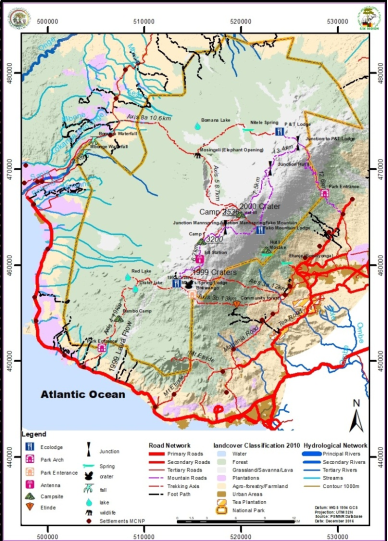
Figure 1. Map of Mount Cameroon National Park, Source [43].
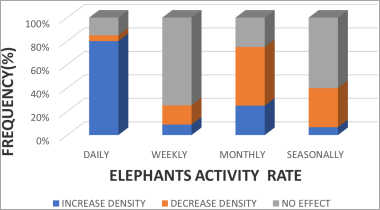
Figure 2. Effect of Elephants Activity and Forest Canopy Structure.
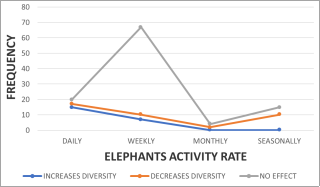
Figure 3. Elephants Activity and Tree Species Composition in the Forest.
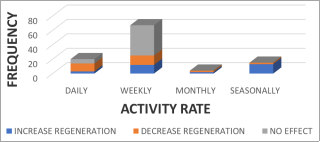
Figure 4. Elephants Activity and Forest Tree Regeneration.
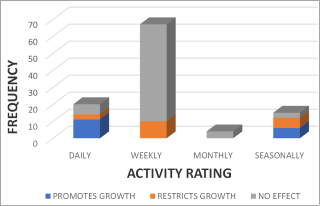
Figure 5. Elephants Activity and Vine Growth.
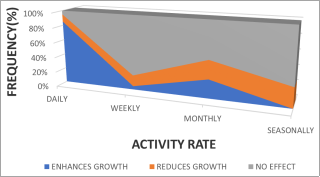
Figure 6. Elephants Activity and Forest Understory.
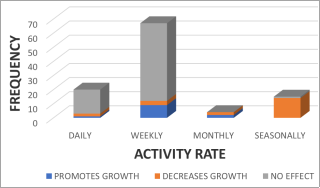
Figure 7. Elephants Activity and Large Trees.
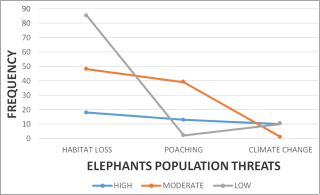
Figure 8. Human-wildlife Conflict and Elephant population Reduction Threat.
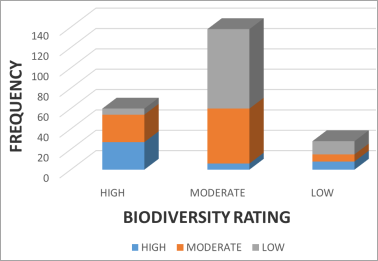
Figure 9. Human-wildlife conflict and Biodiversity Rating.
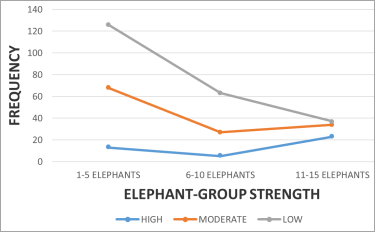
Figure 10. Human-wildlife Conflict and Elephants Grouping Behaviour.




 Share This Article
 Twitter
 Linked In
 Facebook
 Copy
Copy Download